
Creatine for Night Shift: Could Creatine Monohydrate Help Sleep-Deprived Shift Workers?
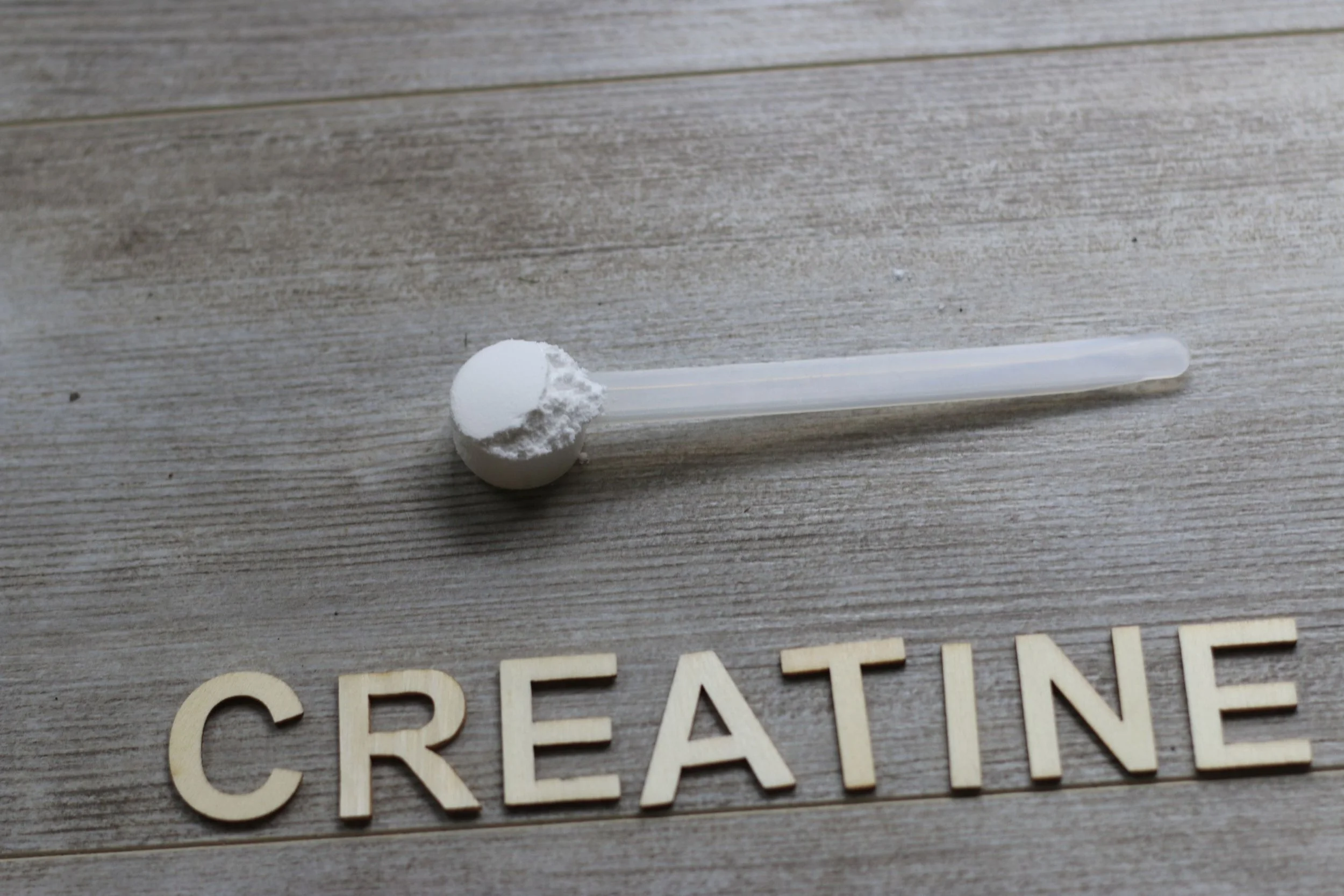
If you work night shift, could taking creatine help you stay sharper when you're tired?
It's an interesting question because creatine monohydrate is normally associated with the gym, strength and muscle performance. But research into creatine, sleep deprivation and cognitive performance is starting to tell another story.
And it could have particular relevance for shift workers.
Let's make one thing clear from the beginning.
We do not currently have enough evidence to say that creatine improves night-shift performance or fixes shift-work fatigue.
But emerging research suggests creatine may help protect some aspects of cognitive performance when people are sleep deprived.[1][2][3][4]
For shift workers regularly trying to function when tired and during the biological night, that's worth exploring.
What does creatine actually do?
Creatine is produced naturally by the body and is also obtained from foods, particularly meat and fish.
Around 95% of the body's creatine is stored in skeletal muscle, but creatine also plays an important role in the brain.[5]
Its primary role involves energy availability.
Our cells use adenosine triphosphate, or ATP, as an immediate source of energy. The creatine-phosphocreatine system helps rapidly regenerate ATP when energy demands increase.[5]
Think of phosphocreatine as part of the body's rapid energy-buffering system.
And that becomes particularly interesting when the brain is under stress.
Creatine and sleep deprivation
Sleep deprivation affects far more than simply how tired you feel.
Attention, reaction time, memory, decision-making and other aspects of cognitive performance can deteriorate when we remain awake for extended periods.
Researchers have therefore started investigating whether increasing creatine availability might help the brain maintain energy availability during sleep deprivation.
A 2024 randomised crossover study investigated a single high dose of creatine during 21 hours of sleep deprivation.[2]
The researchers administered 0.35 g of creatine monohydrate per kilogram of body weight.
Creatine altered cerebral high-energy phosphate metabolism and reduced some of the deterioration in cognitive performance associated with sleep deprivation.[2]
That raised an obvious question.
Could a lower dose produce similar effects?
The new 2026 creatine study
A 2026 randomised, double-blind crossover study by Gordji-Nejad and colleagues investigated this using 29 healthy adults.[1]
Participants completed cognitive testing during 21 hours of sleep deprivation.
On one occasion they received placebo. On another they received a single dose of creatine monohydrate at 0.2 g/kg.
Cognitive testing was conducted before supplementation and again 3, 5.5 and 7.5 hours afterwards.
The results were interesting.
Creatine reduced sleep-deprivation-related deterioration in several areas of cognitive performance, including logical and numerical tasks, language-related processing speed and psychomotor vigilance.[1]
The researchers also reported that female participants appeared to benefit more in several measures.[1]
But this finding needs further investigation before we can conclude that women respond differently.
And there is another important limitation.
These weren't night-shift workers.
They were healthy adults undergoing experimentally induced sleep deprivation.
So could creatine help night-shift workers?
This is where we need to be careful.
There is a tempting chain of reasoning:
Night shift can result in sleep loss and fatigue.
Sleep deprivation can impair cognitive performance.
Creatine appears to reduce some cognitive deterioration during experimental sleep deprivation.
Therefore, creatine improves night-shift performance.
Science doesn't allow us to make that final jump yet.
What we can say is that there is a biologically plausible reason to investigate creatine for shift workers.
Interestingly, this isn't completely new research.
Back in 2006, McMorris and colleagues examined creatine supplementation during sleep deprivation combined with mild exercise. Participants receiving creatine showed less deterioration in several measures of cognitive and psychomotor performance and mood than the placebo group.[3]
And in 2026, researchers published a systematic review specifically examining creatine supplementation during acute sleep deprivation.[4]
Only five studies met the inclusion criteria.
The overall direction of the findings was positive, but the researchers concluded that the evidence remains sparse and that more high-quality trials are required.[4]
That is probably the best description of where we currently stand.
Promising, but preliminary.

Why might creatine matter more when you're tired?
This may also help explain why research into creatine and cognition in healthy, well-rested people hasn't always produced dramatic results.
Perhaps creatine becomes more relevant when the brain is under greater metabolic demand.
Sleep deprivation creates exactly that situation.
The phosphocreatine system helps maintain ATP availability when energy demand increases.[2][5]
This creates a plausible mechanism through which creatine might help support cognitive performance when someone is sleep deprived.
For a nurse making clinical decisions at 4 am, a paramedic responding to an emergency, a police officer driving through the night or a factory worker operating machinery, maintaining attention and reaction time matters.
But again, plausible does not mean proven.
We need studies conducted specifically in real shift workers.
How much creatine should a night-shift worker take?
This is another area where we need to avoid getting ahead of the evidence.
The 2026 study used 0.2 g/kg as a single dose.[1]
For an 80 kg person, that's 16 grams.
The earlier 2024 study used 0.35 g/kg.[2]
For the same person, that's 28 grams.
These experimental doses are substantially higher than the commonly used daily maintenance intake of approximately 3–5 grams of creatine monohydrate.[5]
These studies do not establish that shift workers should take large doses of creatine before or during night shift.
That's an important distinction.
Should shift workers consider creatine monohydrate?
Possibly.
Creatine monohydrate already has an extensive evidence base for exercise performance and is generally considered safe and well tolerated in healthy people when appropriately used.[5]
Its potential role in brain function, cognition and sleep deprivation is an emerging area of research.
For shift workers, that makes creatine particularly interesting.
But creatine should never become another way of trying to override inadequate sleep.
It cannot replace sleep.
It cannot remove circadian disruption.
And it certainly doesn't make chronic sleep restriction harmless.
What the research does give us is a fascinating new question.
Could creatine provide some additional cognitive support when a sleep-deprived brain is being asked to perform during the night?
Right now, the evidence suggests it might.
For shift workers, particularly night-shift workers, creatine monohydrate may therefore be worth considering.
But what we really need next are well-designed studies conducted in the people who could potentially benefit most.
Actual shift workers.
References
WORKING WITH A 24/7 WORKFORCE?
A Healthy Shift helps organisations educate their people and build internal shift-work capability through practical, evidence-based shift-work education and Shift Work Champions™.