
The Cost of Silence in Policing: How Speaking Up Ends Careers
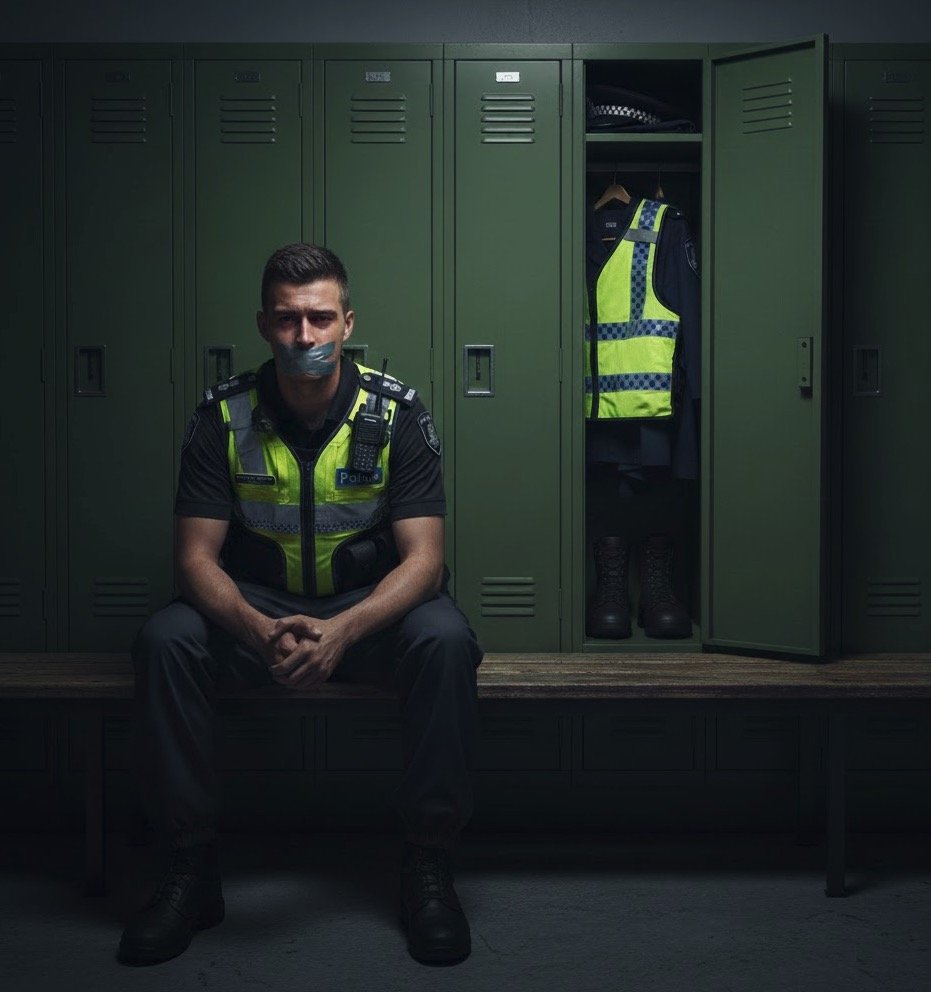
Silence in policing often goes unnoticed.
It doesn’t make headlines.
It doesn’t spark urgent reviews.
It doesn’t come with sirens or flashing lights.
But silence is one of the most damaging forces inside policing right now.
Silence is what happens when officers stop speaking up, because then nothing changes.
Silence is what happens when people are struggling but know there will be consequences if they speak out.
Silence is what happens when exhaustion is normalised, and burnout is dismissed as part of the job.
And silence doesn’t just sit there quietly.
It isolates good officers.
It drives good people out.
It hides problems until they manifest as unplanned leave, illness, mistakes, complaints, resignations, or even worse.
The irony is that policing is built on communication.
Officers are trained to talk.
To listen.
To de-escalate.
To support victims.
To read situations and people.
Yet internally, policing is often terrible at communication. And that’s not rank-specific. It happens at all levels.
When it comes to our own people, silence becomes the default.
I know this because I lived it.
After nearly 40 years in policing, at a time when I was thriving and genuinely enjoying the job, my career ended suddenly. Not because I did anything wrong. But because I spoke up.
I was the victim of an unwanted sexual harassment incident in the workplace by an employee of a partner organisation. When I sought support from management, no one knew what to do. I was passed from department to department. No ownership. No leadership. No clear process.
The louder I spoke, the worse it became.
What should have been handled quickly and professionally turned into targeted bullying designed to silence me, to remove me.
The message was clear. Stop talking. Stop pushing. Stop being inconvenient.
In policing, raising a problem often sees the person raising it become the problem.
That silence didn’t protect the organisation.
It exposed inadequate leadership
It destroyed me.
The experience caused what is known as “sanctuary trauma.” The management paid to protect me became the source of harm. That led to PTSD, depression and anxiety. The stress became so severe that I suffered a T.I.A, despite being in peak physical health at the time. Or so I thought.
Five years of psychology.
Four years of psychiatry.
Medication.
Strain on every part of my personal life.
Eventually, I was forced out.
The final two years of my career were marked by complete silence from the organisation. No welfare check. No contact. No acknowledgement. That is, right up until they wanted to “dispose” of me.
I left without a fight. Without a whimper.
Eighteen months after retiring, I have yet to hear a word from the organisation I gave four decades to. No “thank you”. No recognition. Nothing.
I eventually received my Certificate of Service. Eighteen months late. After a lengthy battle that would blow your mind, just to retrieve it.
Discarded. Like rubbish. Cast out
This was an organisation I gave two marriages to. Robbed me of raising my children in a loving home. An organisation that took birthdays, anniversaries, school events and family time without hesitation. An organisation I served loyally and proudly for 4 decades.
Silence did that.
And my story is not unique.
Every time an officer stops reporting fatigue because they don’t want to be labelled weak, silence wins.
Every time someone doesn’t speak up about bullying because they’ve seen what happens to others, silence wins.
Every time leadership manages risk instead of listening to people, silence wins.
Breaking silence is not weakness.
It’s honesty.
It means leaders who listen instead of deflecting.
It means managers who understand that well-being is not a poster or a policy.
It means creating safe spaces where someone can say “I’m not okay” before it becomes a crisis.
Policing talks a lot about resilience. But resilience does not mean suffering quietly. And it does not mean absorbing damage until someone breaks.
If policing wants to improve wellbeing, retention and internal trust, it has to encourage honest conversation. Not punish it.
Because silence is not neutral.
It causes harm.
It costs careers.
It damages families.
And sometimes, it costs lives.
The loudest problems in policing are often the ones no one is talking about.
And until silence is challenged at every rank, policing will continue to lose good people. Not because they can’t do the job. But because the job refuses to hear them.
Silence is damaging policing.
And it has to stop.
Hear me speak about this
About Roger Sutherland
As a coach and advocate for shift workers, my goal is to provide practical, evidence-based strategies that empower individuals to thrive in their roles. By understanding and addressing the challenges around shift work, shift workers can achieve better health outcomes and lead more fulfilling lives both on and off the job.
WORKING WITH A 24/7 WORKFORCE?
A Healthy Shift helps organisations educate their people and build internal shift-work capability through practical, evidence-based shift-work education and Shift Work Champions™.